
Saugus Board of Health Opens 60-Day Question Period on Ash Landfill Closure
At its June 1st meeting, the Saugus Board of Health took another step toward getting clearer answers on the future of the WIN Waste ash landfill. After months of questions about closure, remaining capacity, ash placement, cover material, long-term monitoring, and MassDEP oversight, the Board voted to open a 60-day period for questions from the Board, the public, and other interested communities.
Those questions are expected to be directed to MassDEP and WIN Waste ahead of the Board’s next scheduled meeting in September. This creates a useful opportunity, but it also reflects a larger issue: the public record on landfill closure is still too fragmented.
The discussion is getting more specific
WIN Waste began with its regular operational update. The company reported that since the May 11th meeting, the facility operated at approximately 57% boiler availability, processed just over 15,000 tons of waste, and generated approximately 8,000 megawatt-hours of electricity. WIN also reported that scheduled boiler and turbine outages were completed by May 23rd.
The Board also followed up on a recent odor complaint. WIN said it met with MassDEP on May 12th and reviewed opacity data, emissions reports, plant logs, CCTV footage, and discussions with site personnel. According to WIN, MassDEP was satisfied with that review. One Board member also asked whether opacity data could be reviewed minute by minute, rather than only through six-minute reporting blocks. WIN confirmed that more detailed data is available and said it would work with the town to provide it.
The more important discussion centered on the ash landfill itself. Board member Joe Dorant raised detailed questions about the Valley Fill Project, the sequence of ash placement and capping, and whether the current closure schedule still matches earlier permit documents from 2017 and 2018. That moved the discussion from general concern into the specific mechanics of closure.
“If you’re not going to do that section, when are we going to know if you’re going to do it or not?”
The timeline needs explanation
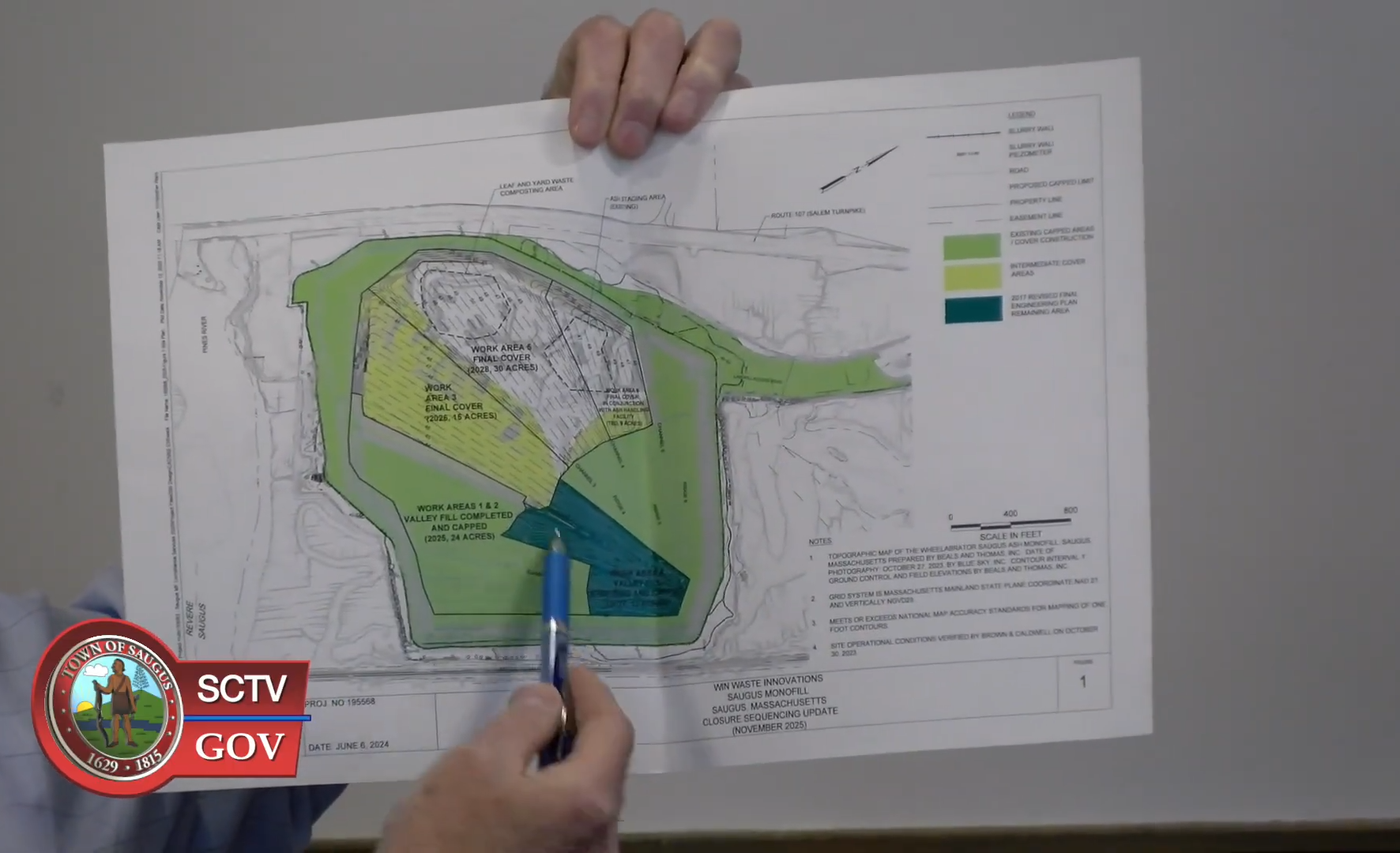
Joe Dorant reviews the Valley Fill sequencing plan during the June 1st Saugus Board of Health discussion on ash landfill closure. Source: SaugusTV
Dorant walked through the earlier permit sequence for Valley 1 and Valley 2, including ash placement, stormwater reconstruction, and final cover work expected in stages through 2027. He then pointed to a more recent closure and post-closure cost estimate that appears to reference final capping work in 2028 and 2029.
If ash disposal is supposed to end in November 2027, why do current closure documents appear to extend major final capping work into 2028 and 2029? There may be a reasonable explanation. Final closure work may continue after disposal ends. But if that’s the case, the Board and the public need that explanation stated clearly, in writing, and on the record.
Dorant also reviewed recent ash disposal figures from the latest bimonthly report. In March, WIN generated 9,017 tons of ash, disposed of 3,067 tons at the Saugus ash landfill, and shipped 5,950 tons off site. In April, WIN generated 8,786 tons of ash, disposed of 2,367 tons at the landfill, and shipped 6,419 tons off site. Using those figures and prior reported capacity numbers, Dorant estimated that the ash landfill may have had roughly 19,929 cubic yards of remaining capacity after the most recent six-month period. If a similar disposal rate continued for another six months, he estimated remaining capacity could drop to around 7,000 cubic yards.
Those numbers should not have to be reverse-engineered from scattered reports. If WIN Waste has current capacity figures, projected disposal rates, and updated closure assumptions, those should be provided directly.
The right people need to be in the room
The Board also asked who from WIN would be best positioned to answer detailed landfill questions. WIN identified Don Musial, the monofill engineer, as the appropriate technical contact.
That response should help set the standard for September. Boiler availability, megawatt hours, and plant maintenance do not answer questions about landfill sequencing, remaining capacity, closure cost estimates, post-closure monitoring, or MassDEP oversight. If the Board is asking landfill questions, it needs landfill-specific answers from people who work directly on the landfill.
If Don Musial is the right person to answer those questions, he should be present for the September meeting. If MassDEP is the agency responsible for reviewing or approving key closure decisions, MassDEP should answer written questions clearly and directly.
MassDEP should be part of the record
Saugus Public Health Director John Fralick said he contacted MassDEP’s Mark Fairbrother about the WIN permit and the future of the site. According to Fralick, Fairbrother indicated that he was unable to attend a meeting at this time.
That is disappointing, but the Board’s next step is reasonable. Rather than relying on a general request for attendance, the Board will gather specific written questions and send them to MassDEP and WIN Waste. That should make it harder for the major issues to remain vague.
The public has legitimate questions. What is the current approved closure schedule? Has the Valley Fill Project sequencing changed? How much capacity remains? What closure work will occur before November 2027? What work will occur after? What monitoring will continue after disposal ends? What testing is done for runoff, groundwater, and potential heavy metals? What role does the Board of Health play before and after closure?
Those questions deserve clear answers.
Closure is not the end of the issue
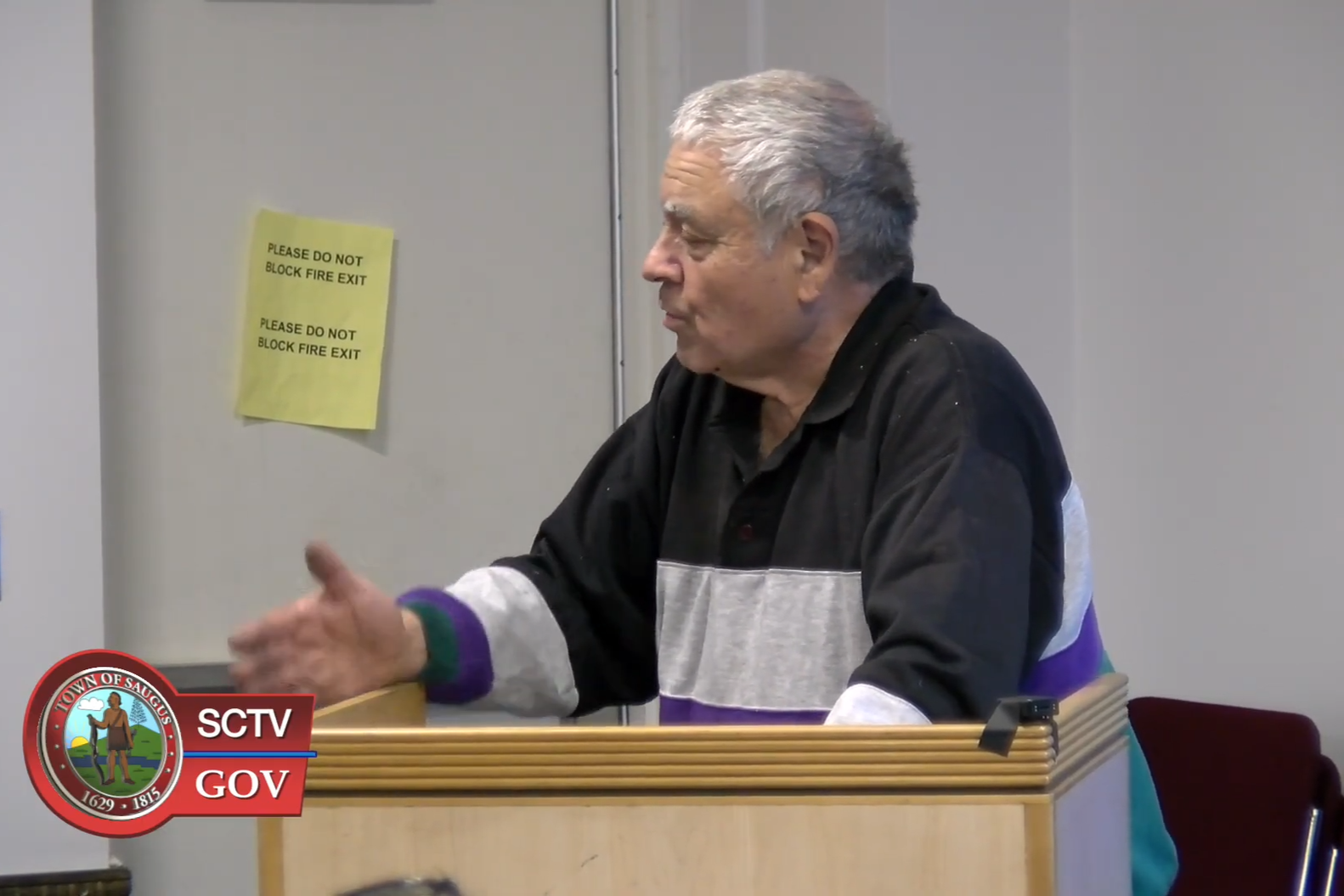
Peter Manoogian speaks at Saugus Board of Health meeting. June 1st, 2026. Source: SaugusTV
The June 1st meeting also touched on what happens after ash disposal ends. Former Selectman and Town Meeting Member Peter Manoogian discussed language in the existing Host Community Agreement and argued that post-disposal redevelopment could create future tax revenue for Saugus if the property is eventually used for something other than ash disposal.
This is an important part of the larger conversation. The future of the WIN property shouldn’t be framed only as a choice between continued ash disposal and no economic use at all. But before anyone can have a serious conversation about future uses, the town needs a clear understanding of the closure process, the condition of the site, the limits on redevelopment, and the monitoring obligations that will remain.
A closed landfill is still a landfill. The question is how it will be capped, monitored, maintained, and protected over time.
A useful opportunity for the public
The Board’s 60-day question period gives residents and nearby communities a real opportunity to put concerns into the public process. That opportunity should be used carefully. The strongest questions will be specific, document-based, and focused on issues MassDEP and WIN Waste can answer directly.
For Rumney Marsh Conservancy, the concerns are straightforward. The ash landfill sits beside one of the most significant remaining salt marsh systems in the Boston area. Closure, runoff, groundwater, stormwater controls, long-term monitoring, and post-closure land use all have public-health and environmental importance.
The June 1st meeting showed that the Board of Health is taking the issue seriously. It also showed that the public record is still incomplete. The next step is to make sure the right questions are asked before the facility reaches the final stretch of its current ash disposal timeline.
Rumney Marsh Conservancy expects to review the record and submit questions as part of that process.
