
Restoration Doesn’t End When the Project Is Built
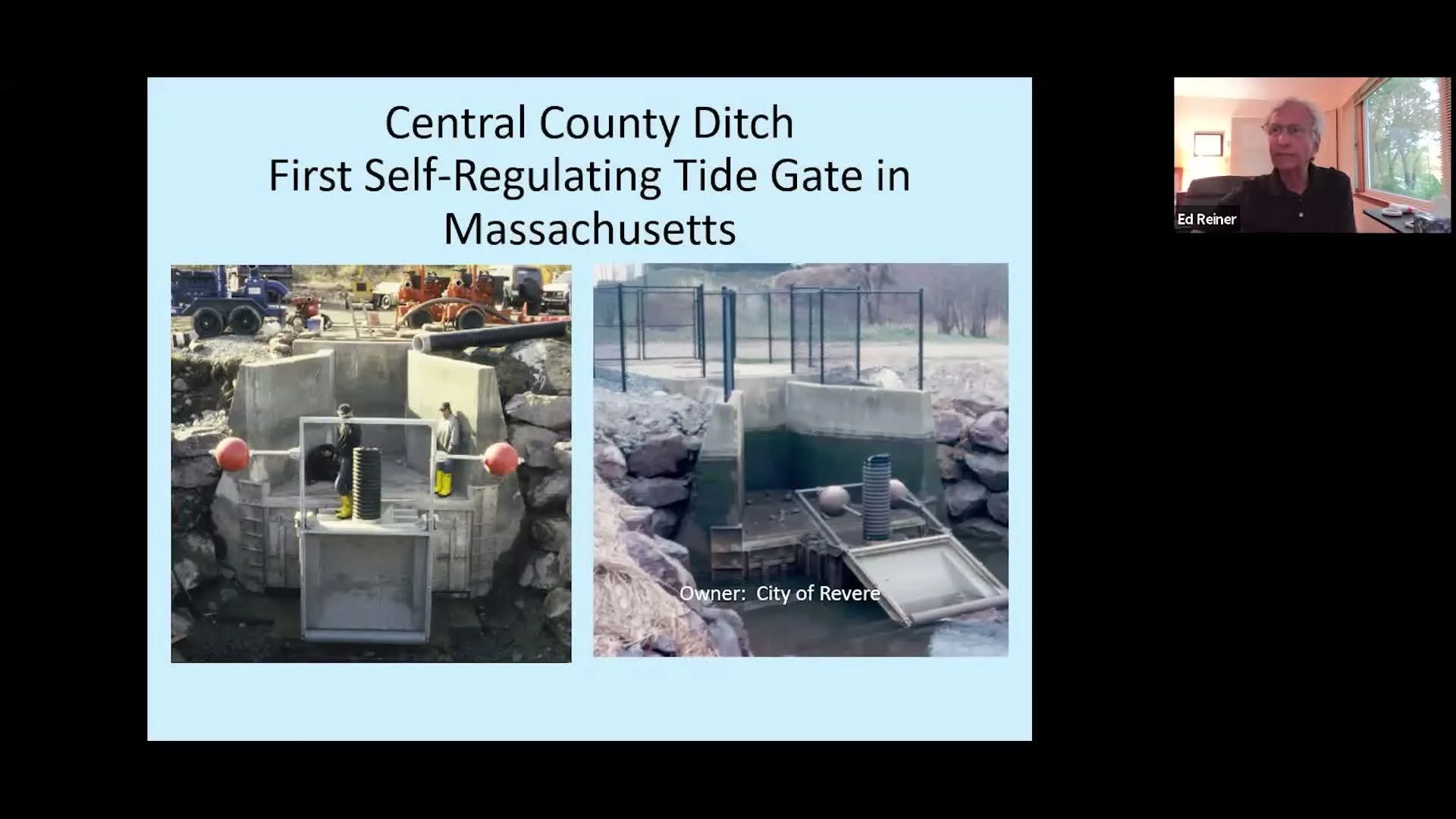
Rumney Marsh Conservancy welcomed back Ed Reiner for a virtual presentation on June 30, 2026
On Tuesday evening, Rumney Marsh Conservancy welcomed back retired EPA wetland scientist Ed Reiner for a second public webinar, this time focused on tidally restricted marshes in and around Rumney Marsh.
In many ways this conversation felt like a continuation of our first webinar on the abandoned I-95 embankment. The first discussion looked at one massive unfinished piece of 1960s infrastructure and how it continues to shape the hydrology of Rumney Marsh today. This second discussion moved into the smaller, more distributed infrastructure that also determines the future of the marsh: tide gates, culverts, ditches, pipes, flood control structures, and the maintenance systems that are supposed to keep them working.
It wasn’t just a webinar about Rumney Marsh, it was also about engineering, design, failure, responsibility, and the long-term work required to protect a restored landscape after the ribbon-cutting is over.
Hydrology, Again
A recurring theme of our first webinar was that hydrology defines the outcome. The same was true here.
Tidal restrictions aren’t always dramatic from the surface. A collapsed pipe, a blocked culvert, a tide gate with a missing float, or one that is never adjusted according to its permit can reshape an entire marsh. Over time, reduced tidal flow lowers salinity, weakens native salt marsh vegetation, encourages invasive plants like Phragmites, reduces habitat value, changes water levels, affects mosquito control, and can even increase fire danger. “If you decrease salinity, you get Phragmites,” said Ed.
This concept remained a central theme. A salt marsh cannot remain a salt marsh in name only. It needs water, flow, flushing, and salinity. When those processes are restricted, the system will change over time.
The results aren’t always ecological, but sometimes infrastructure: a public safety problem, a maintenance problem, and eventually a governance problem.
A Landscape of Clever Engineering
One of the more remarkable parts of the webinar was how much engineering sits behind the marshes many people pass by without noticing.
Ed walked through examples of self-regulating tide gates, combination gates, long culverts, concrete vaults, drainage channels, and structures designed to balance salt marsh restoration with flood protection for nearby neighborhoods. Some of these systems were clever, and some worked well when properly operated. Some failed because of design errors, vandalism, missing parts, blocked outlets, undersized pipes, or lack of follow-through.
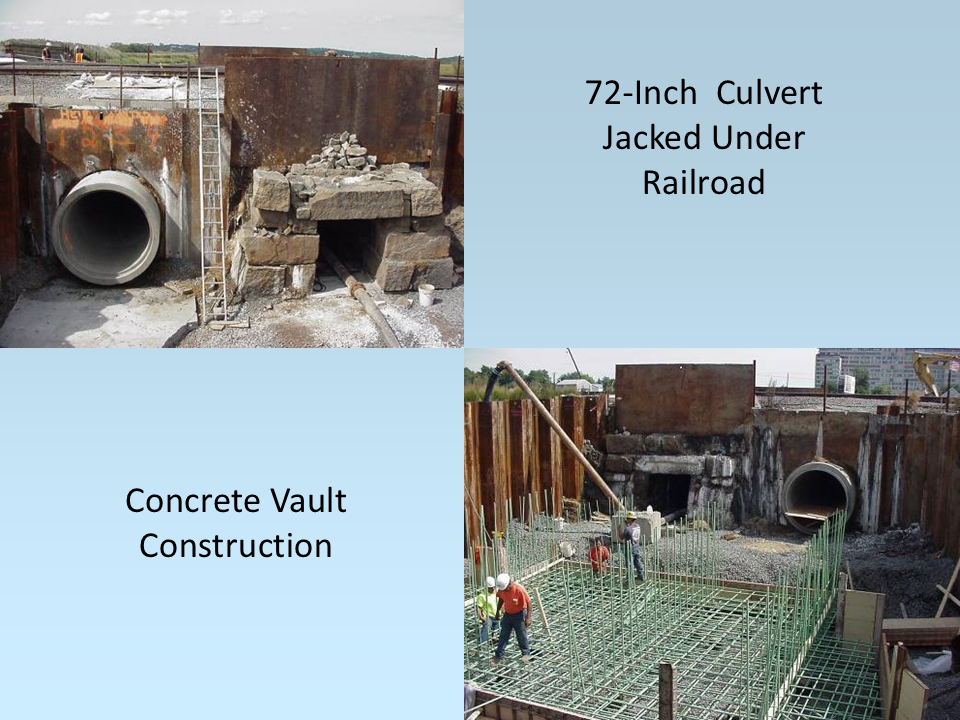
One example near Oak Island captured the scale of some of the engineering involved. A 72-inch culvert was hydraulically jacked beneath an active MBTA rail line to replace a much smaller, undersized structure from the 1800’s. That is a large, complex civil engineering project in service of restoring tidal exchange to a marsh system.
But even there, Ed explained, the project included an engineering error that limited proper adjustment of the tide gate mechanism. The structure was impressive, but not perfect. The lesson wasn’t that engineering is bad. It was that engineering has to be designed, reviewed, operated, monitored, and maintained with the marsh in mind.
When Restoration Works
The evening was not meant to be a catalog of failures. Ed showed examples where restoration efforts produced real results.
At several sites, when tidal flow was restored, Phragmites declined and native salt marsh vegetation began to return. Mudflat, Salicornia, Spartina alterniflora, and other signs of recovery appeared over time. In one section, Ed described how a previously restricted area began to change after tidal exchange improved: “If you restore tidal flow, your Phragmites dies.”
Salt marshes can recover when tidal flow is restored, salinity returns, and the system is allowed to function.
Ed also noted that natural colonization can and usually does work. In some restored areas, vegetation did not need to be planted everywhere. Once the elevation, salinity, and tidal conditions were right, the marsh began doing what marshes do.
Restoration is not always about imposing a finished landscape. Sometimes it’s about creating conditions that allow the marsh to rebuild itself.
When Restoration Is Not Protected
The harder part of the webinar was what happens after restoration projects are built.
Again and again, Ed returned to the same problem: projects that were permitted, constructed, and intended to provide both ecological restoration and flood protection, but were later undermined by poor maintenance, missing parts, blocked culverts, unclear responsibility, noncompliance with operation and maintenance plans, or failure to monitor water levels.
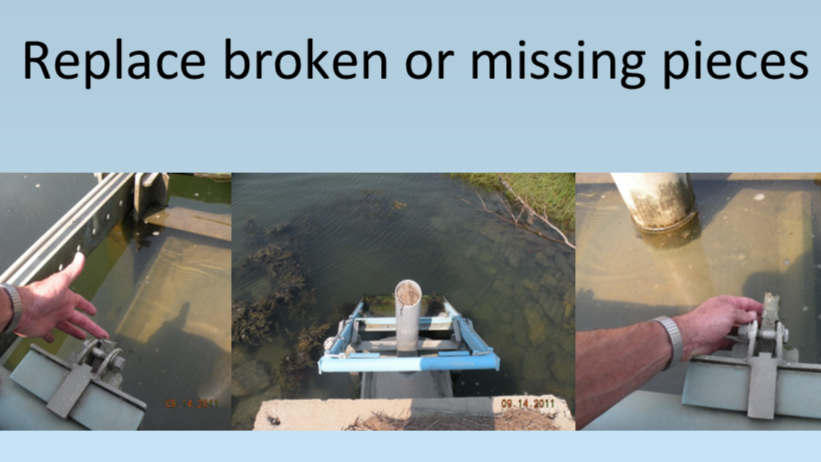
“If you don’t repair your pipes, what good are your new tide gates and control structures?”
A tide gate does not function in isolation. A culvert does not help if it is blocked. A restoration plan does not protect a marsh if no one follows the operating plan. A permit condition does not mean much if it is ignored for years. This is where the webinar moved from ecology into accountability.
Ed described restored marshes that were later filled again. He described structures damaged or stripped for scrap metal. He described tide gates that lost floats, culverts blocked by rocks, outlets that were never properly repaired, monitoring that was required but not performed, and operation plans that were not followed.
Restoration is not just excavation, planting, permitting, or construction. It is stewardship. It is follow-up. It is documentation. It is inspection. It is enforcement when necessary. If restored marshes can be filled again, neglected again, or allowed to fail again, then restoration is never really finished.
Maintenance Is Not a Minor Detail
Too often, environmental restoration is discussed as if the project ends when construction ends. Ed’s examples showed the opposite. Tide gates need adjustment. Culverts need inspection. Ditches need to remain functional. Water levels need to be monitored. Debris and sediment need attention. Mechanical parts need repair. Operation and maintenance plans need to be followed.
During the Q&A, when asked what kind of monitoring would be most valuable, Ed was clear:
“Monitoring of water levels is the most important thing.”
That is not just a technical point. It is a public accountability point. If a project is supposed to restore tidal flow while protecting neighborhoods from flooding, water level monitoring is how the public knows whether the structure is doing what it was permitted and designed to do.
Flood Protection and Restoration Are Not Opposites
The webinar didn’t frame restoration as something that ignores nearby neighborhoods. In fact, quite the opposite. Many of the projects discussed were designed to restore tidal exchange while also managing flood risk. Self-regulating tide gates, combination gates, and controlled tidal flow structures exist because communities are trying to balance ecological repair with protection for homes, businesses, roads, and public infrastructure.
The problem is that balance only works when systems are operated as designed.
A structure built to provide both restoration and flood protection can fail in either direction. If it blocks too much tide, the marsh suffers. If it cannot close properly, flood risk may increase. If it is not monitored, no one can say with confidence whether the balance is being achieved.
That’s why the question isn’t simply whether tide gates are good or bad. The better question is whether the right structure is in the right place, whether it was properly designed, whether it is being operated under a clear plan, whether it is being monitored, and whether someone is responsible for maintaining it.
The Embankment Returns
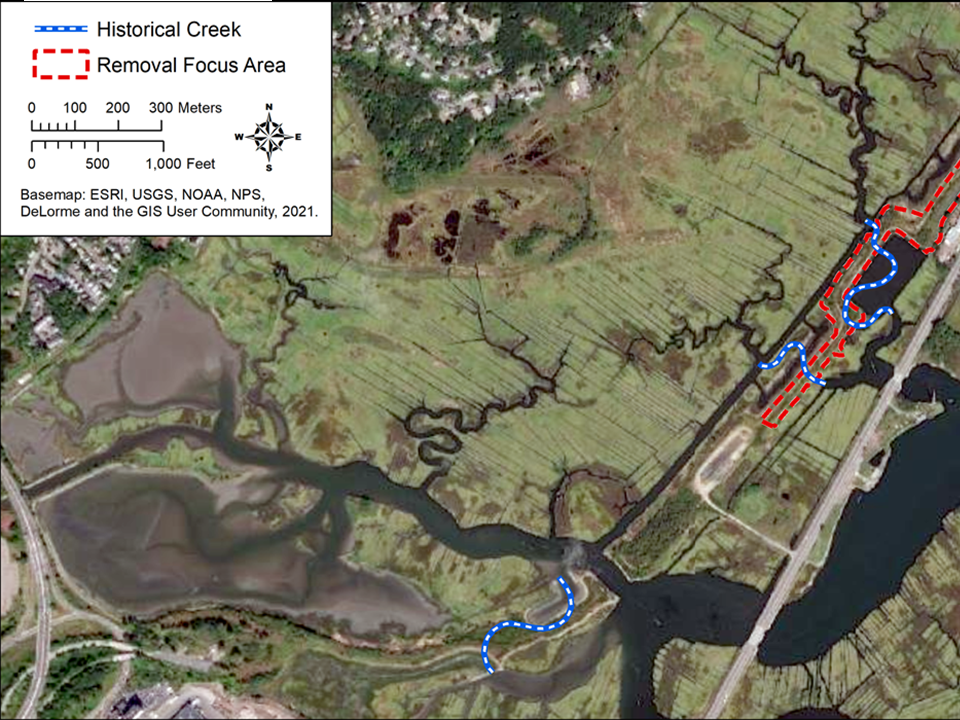
Even though this second webinar focused heavily on tide gates and culverts, the abandoned I-95 embankment returned near the end of the discussion.
Why? The embankment remains the largest hydrologic intervention in Rumney Marsh and one of the largest restoration questions still unresolved. Ed noted that completed restoration projects have restored portions of the former highway fill, but the broader embankment still tidally restricts hundreds of acres of marsh.
The embankment, tide gates, culverts, road crossings, rail crossings, drainage ditches, and flood control systems all tell the same larger story. Hydrology has been altered. Some repairs have worked. Some opportunities have been missed. Some restoration has succeeded. Some has been neglected. And the future of the marsh depends on whether we are willing to understand the system as a system.
What We Took Away
If the first webinar helped explain why the abandoned I-95 embankment still matters, the second helped explain why restoration requires long-term vigilance.
It is not enough to know that salt marshes need salt water. It is not enough to build a tide gate, replace a culvert, or excavate a marsh surface to the right elevation. Those actions are only the beginning.
Good restoration requires clear design, careful permitting, operation and maintenance plans, water level monitoring, public ownership of the issue, and agencies willing to follow through. It also requires the public to keep paying attention after the project is built.
That may be one of the most important roles Rumney Marsh Conservancy can play. Not replacing agencies. Not pretending these systems are simple. But helping preserve institutional knowledge, document conditions, ask better questions, and make sure the public understands why these details are important.
Because in Rumney Marsh, a pipe is not just a pipe. A tide gate is not just a tide gate. A blocked culvert or missing float can determine whether a marsh receives the salt water it needs, whether native vegetation returns, whether Phragmites expands, whether mosquitoes proliferate, whether flood protection works as intended, and whether a restoration project succeeds or quietly fails.
Gratitude and What Comes Next
We’re deeply grateful to Ed Reiner for once again sharing his time, experience, and decades of knowledge with the Rumney Marsh community. We are also grateful to everyone who joined, submitted questions, and helped make the webinar a real discussion.
These programs are part of a larger effort by Rumney Marsh Conservancy to build public understanding around the systems that shape this estuary. Some of those systems are beautiful. Some are broken. Some are hidden in pipes, under roads, beneath rail lines, or behind assumptions that have gone unchallenged for too long.
The June 30th webinar reminded us that protecting Rumney Marsh requires both imagination and persistence. It requires science, engineering, history, public attention, and a willingness to keep asking who is responsible for the systems we depend on.
This live webinar was recorded and available to view on our videos page.
