
Sales Creek: An Overlooked Waterway of the Rumney Marsh ACEC
Most people have driven past Suffolk Downs a hundred times without realizing there is an active tidal creek running straight through the site. That creek is called Sales Creek. And it plays a bigger role in the Rumney Marsh and Belle Isle ecosystem than most people realize.
What is Sales Creek?
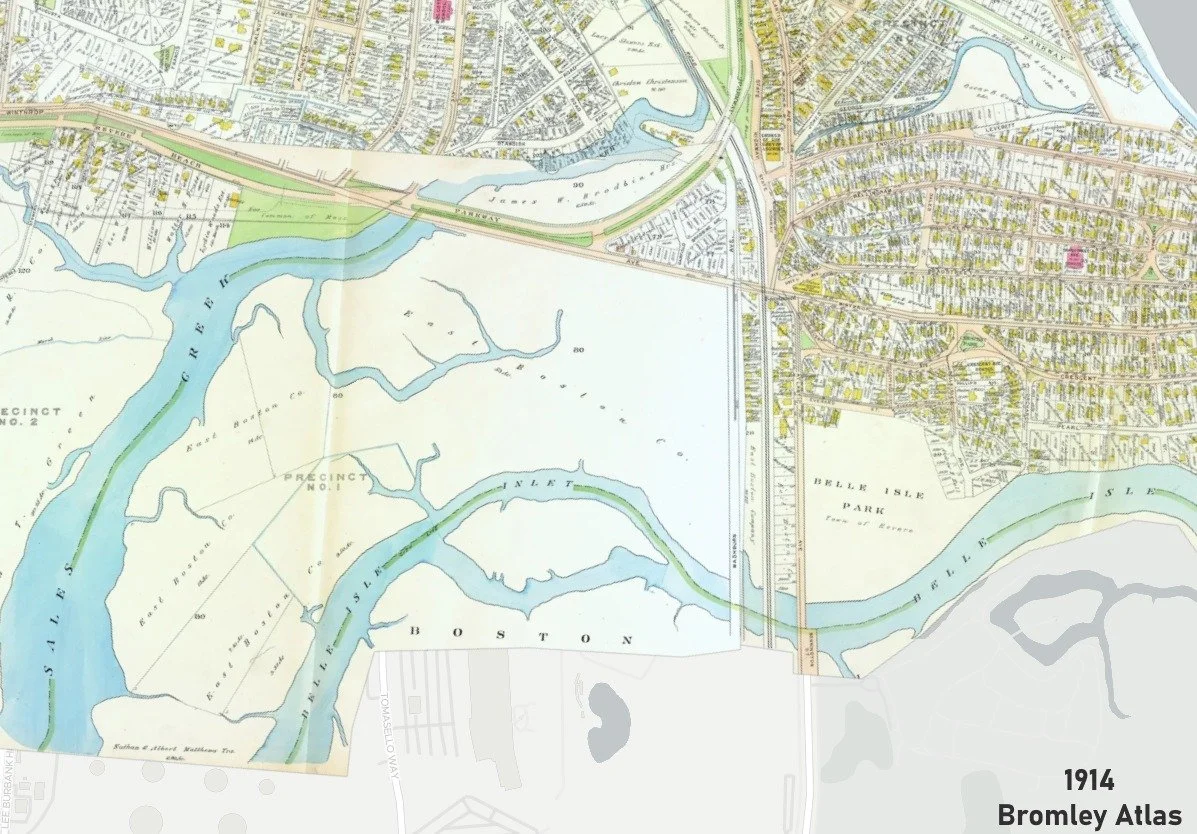
1914 Bromley Atlas showing Sales Creek prior to industrialization
Sales Creek is a tidal drainage channel that cuts through the interior of the Suffolk Downs property and forms part of the municipal boundary between Revere and East Boston.
It connects upland areas and historic wetlands on the former racetrack grounds to Belle Isle Marsh and then out to Boston Harbor through Belle Isle Creek.
In simple terms: It's one of the physical links between Suffolk Downs and the Rumney Marsh ACEC system.
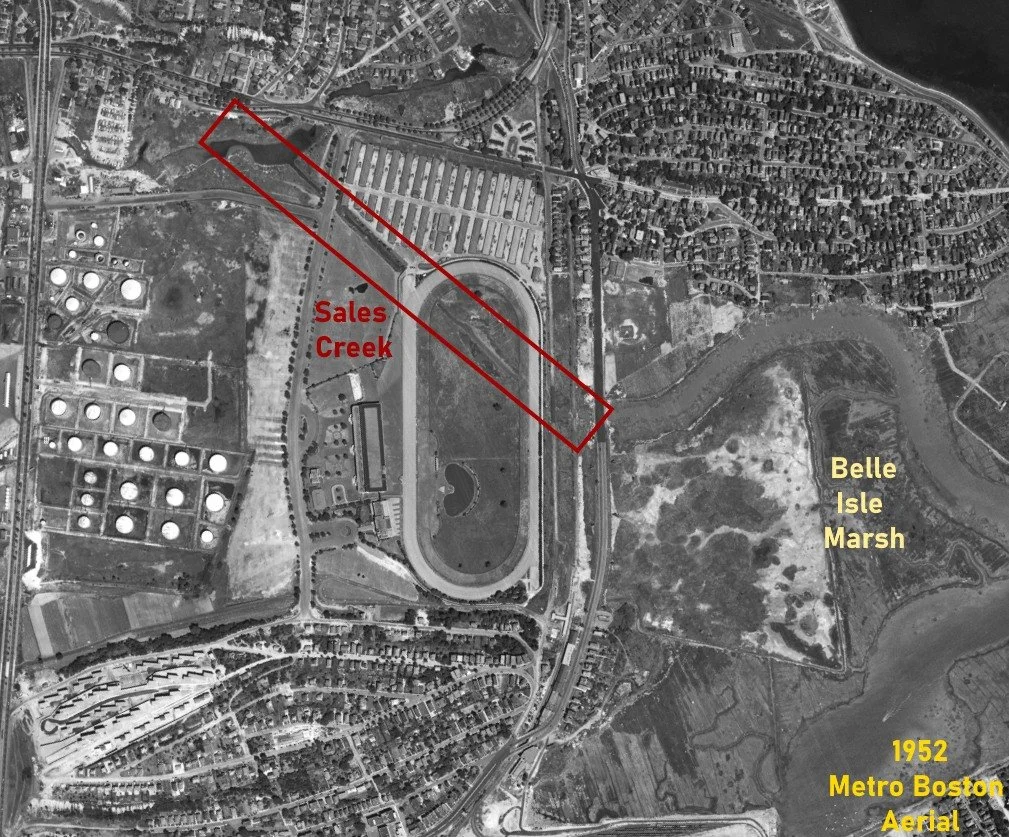
1952 Aerial showing Sales Creek post-development
Natural creek or man made channel?
Historically, this area was part of a much larger salt marsh and tidal creek network connected to Chelsea Creek and Belle Isle Marsh.
Over time, post-WWII development and major filling operations reshaped the landscape. Large portions of the marsh were filled for the racetrack, industrial uses, and airport-related development. Sales Creek was straightened, culverted, and engineered to function as a drainage channel.
So today, it's both. It began as a natural tidal creek and marsh channel but exists now in a heavily modified and constrained form.
Why does it matter?
Even in its altered state, Sales Creek still carries tidal water, stormwater, and runoff into Belle Isle Marsh.
That means its condition directly affects:
Water quality in Belle Isle Marsh
Flooding patterns in East Boston and Revere
Habitat health for fish, birds, shellfish, and salt marsh vegetation
How storm surge and sea level rise move through this part of the coast
It's not just a ditch, it's regional infrastructure and a living part of the marsh system.

Suffolk Downs 1950's. Source: BPL / Leslie Jones
Past problems and fines
Suffolk Downs had a documented history of pollution discharging into Sales Creek, particularly during its time as an active racetrack.
This included manure-laden stormwater, process wastewater, and runoff from stable areas. Regulators found elevated levels of nutrients and bacteria entering the creek. This led to enforcement actions and fines tied directly to water quality violations. Sales Creek became one of the pathways through which human activity on the site directly impacted Belle Isle Marsh.
DCR repairs and culvert failures
By the early 2000s, large culverts carrying Sales Creek under parts of Suffolk Downs were failing. Sinkholes and structural collapses started to appear around the old racetrack areas.
In response, the state funded major DCR infrastructure work to replace failing culverts, restore drainage capacity, and dredge sections of the creek to maintain flow.
This was not just about a racetrack, it was about protecting a major wetland system downstream.
Tide gates and flood control
Sales Creek’s water levels are also influenced by the DCR tide gate and pump station near Bennington Street next to Belle Isle Marsh.
This pump station attempts to balance flood control with tidal exchange. It is a difficult job and not a perfect system. When heavy rainfall combines with high tide or storm surge, this system determines whether water backs up into neighborhoods or can drain out to the harbor.
Sales Creek is directly part of that equation.
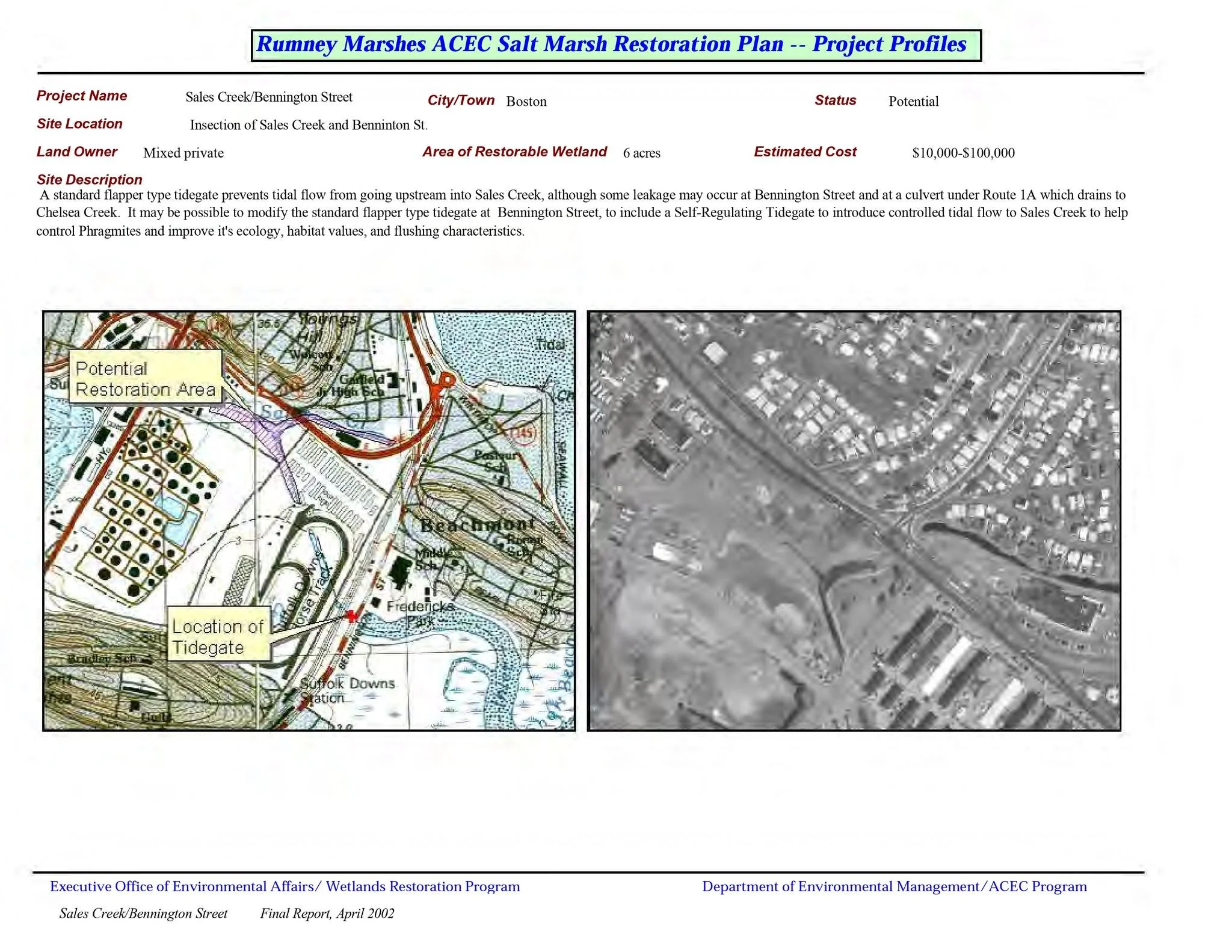
Part of the Rumney Marsh ACEC
Sales Creek and its bordering wetlands are officially included within the Rumney Marsh Area of Critical Environmental Concern.
That status recognizes the ecological importance of this entire connected estuary, including Belle Isle Marsh, Chelsea Creek, Bear Creek, and surrounding tidal systems.
Sales Creek is not an isolated channel, it's part of a much larger living estuary.
The future at Suffolk Downs
As the Suffolk Downs site undergoes redevelopment, planners and engineers are increasingly discussing ways to restore, “daylight,” or incorporate Sales Creek into new open space corridors and floodable parks.
In many ways this reflects a lesson long understood by wetlands scientists: tidal creeks are fundamental parts of coastal systems. Even when altered or buried, they continue to shape how water moves across the landscape.
