Starling Invasion!
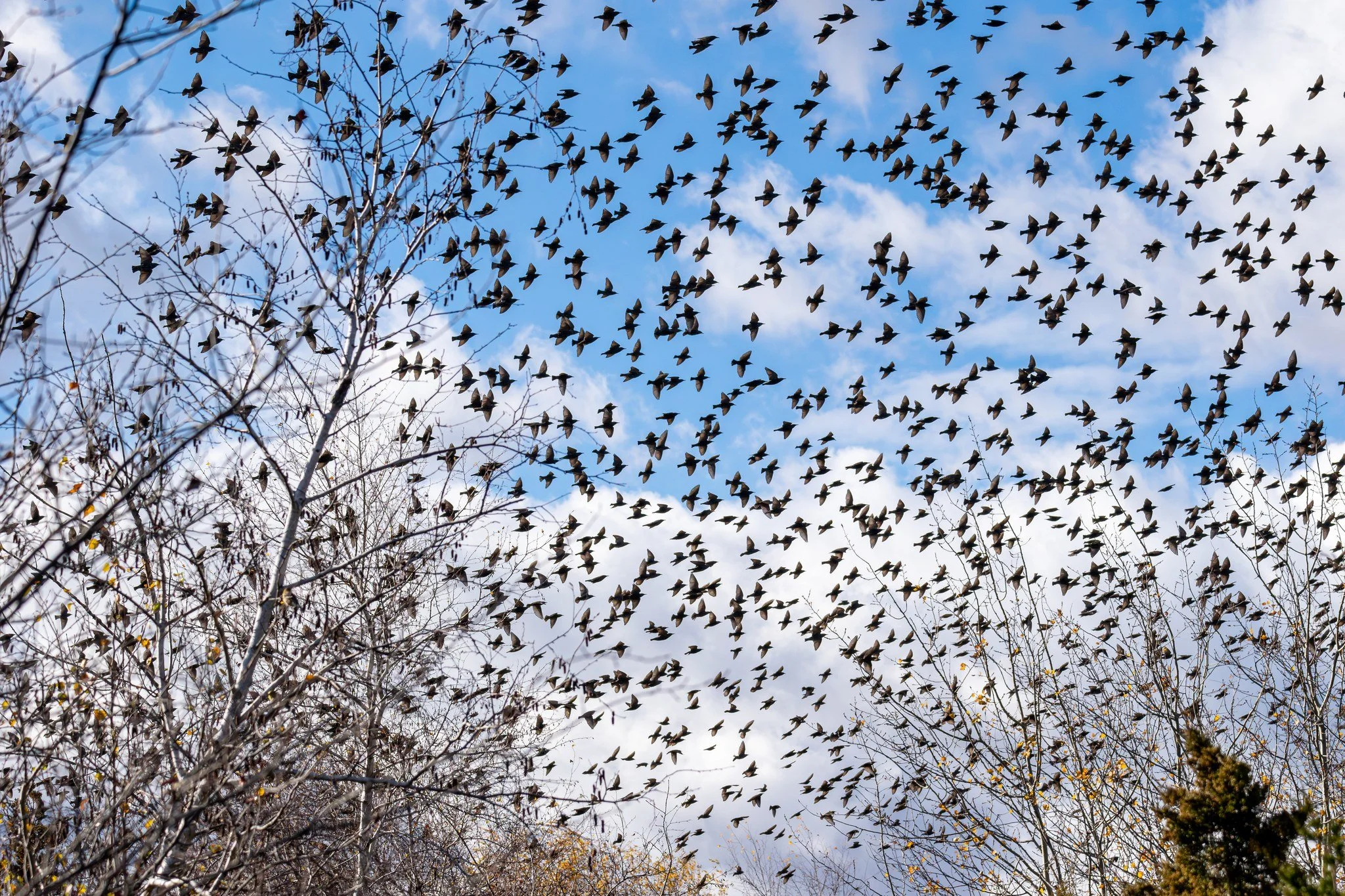
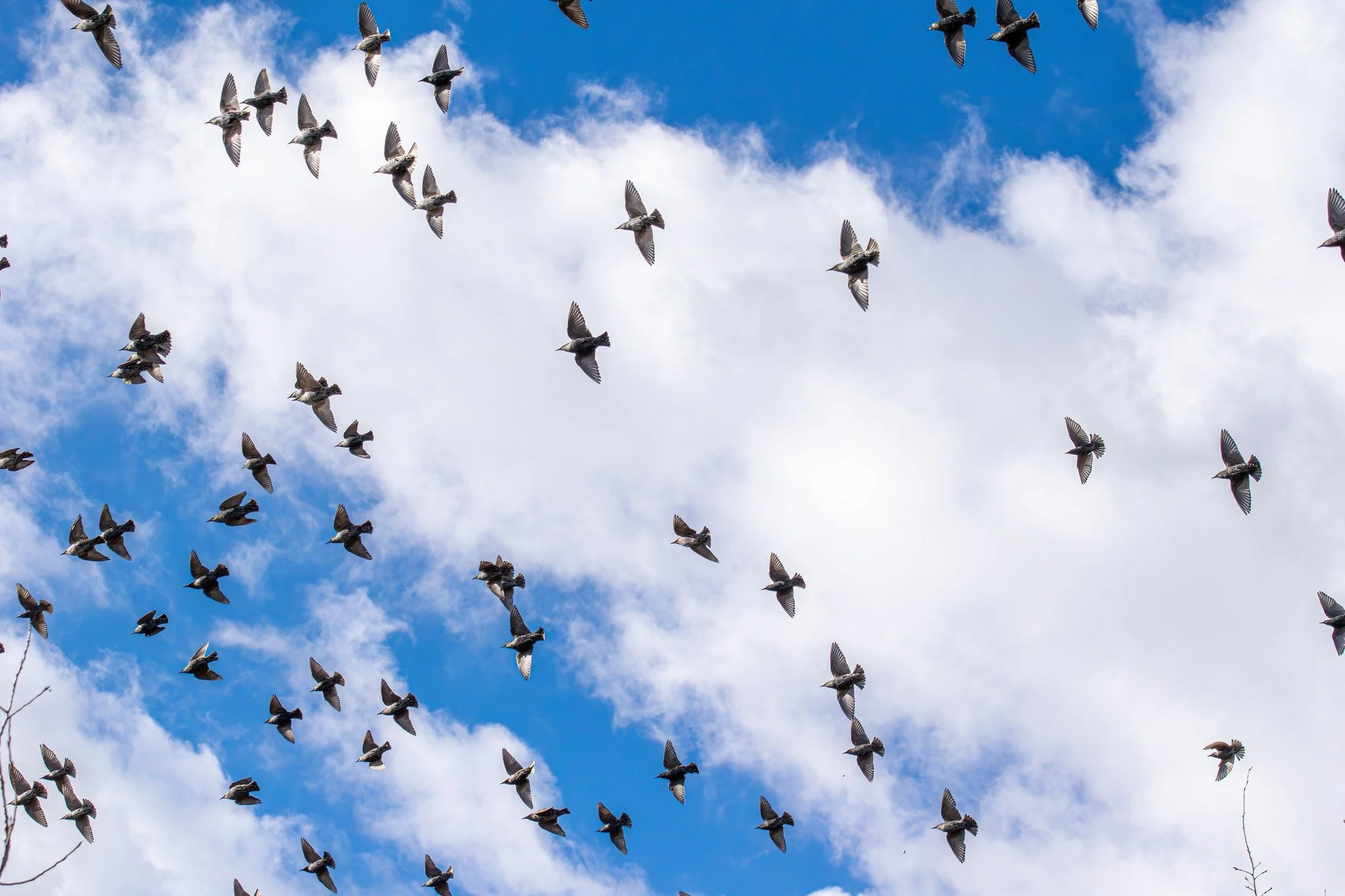
No, this is not a scene from an Alfred Hitchcock movie. This is Rumney Marsh on 11/16, with hundreds of European Starlings gathering in the sky in one of their classic winter flock displays.
Starlings form these huge groups to protect themselves from predators. When a hawk shows up, the entire flock moves as one. The sudden twists and waves help confuse the predator and make it harder to single out a target.
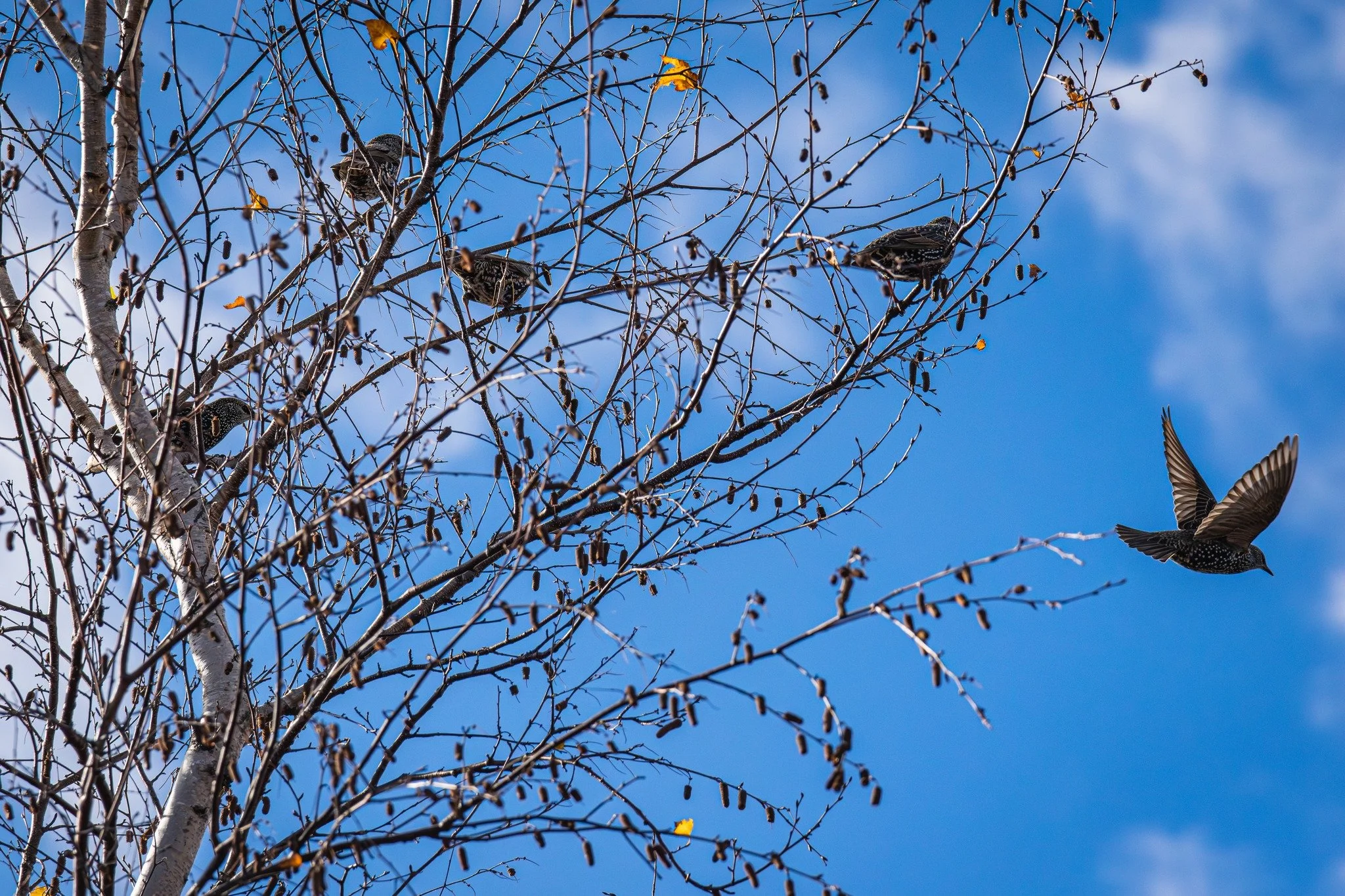
Their look also changes with the seasons. In fall and winter their beaks turn dark and their feathers develop heavy white spotting, giving them that speckled look. In spring they shift to a sleeker, glossy black body and a bright yellow bill. Their flock sizes also explode this time of year because all of the juveniles born over the summer are now full grown and joining the larger winter groups.
Rumney Marsh is a perfect staging area for them this time of year. The open space and shifting tides create ideal feeding conditions, and nearby trees and structures offer safe roosts at night. So when the conditions line up, you get skies filled with them.