
Who was J.P. Squire?
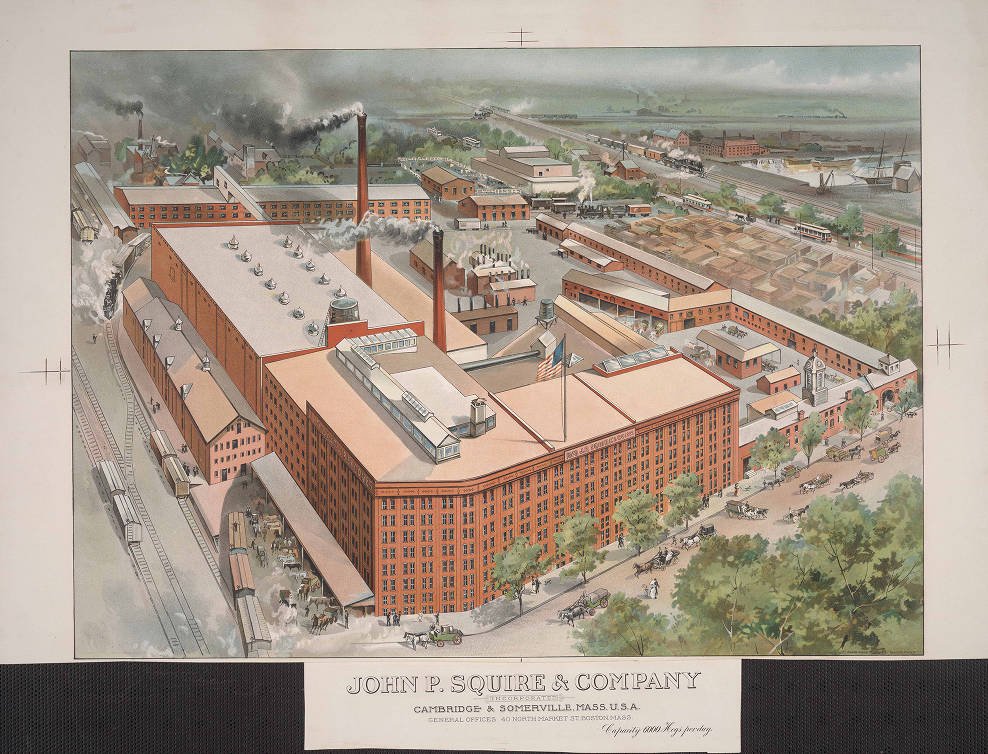
A chromolithographic view of the John P. Squire and Company's meatpacking factory on Gore and Medford Streets in East Cambridge, Mass.
References: East Cambridge / Susan E. Maycock. Cambridge, Mass.: Cambridge Historical Commission, 1998, p. 202-205.
Squire Road in Revere is named after John P. Squire, one of the largest pork packers in nineteenth century New England. His business empire stretched from the slaughterhouses of East Cambridge to farmland along the edge of Rumney Marsh.
Squire started small. In 1855, he purchased land along the Miller’s River in East Cambridge and opened a slaughterhouse for processing swine. At first, he was butchering just one hog per day. But the location was perfect. His facility sat alongside the Grand Junction and Fitchburg railroad lines, giving him direct access to hog farmers across New England and the Midwest.
By the early 1870s, pigs were arriving in train cars, sometimes 100 plus carloads per day. His company was selling fresh pork, bacon, ham, sausages, pigs’ feet and lard throughout Boston and beyond, and had developed a major export business shipping pork products to Liverpool, England.
This was not a small operation. It became one of the largest meatpacking enterprises in the region.
Rumney Marsh played an important role in Squire’s operation
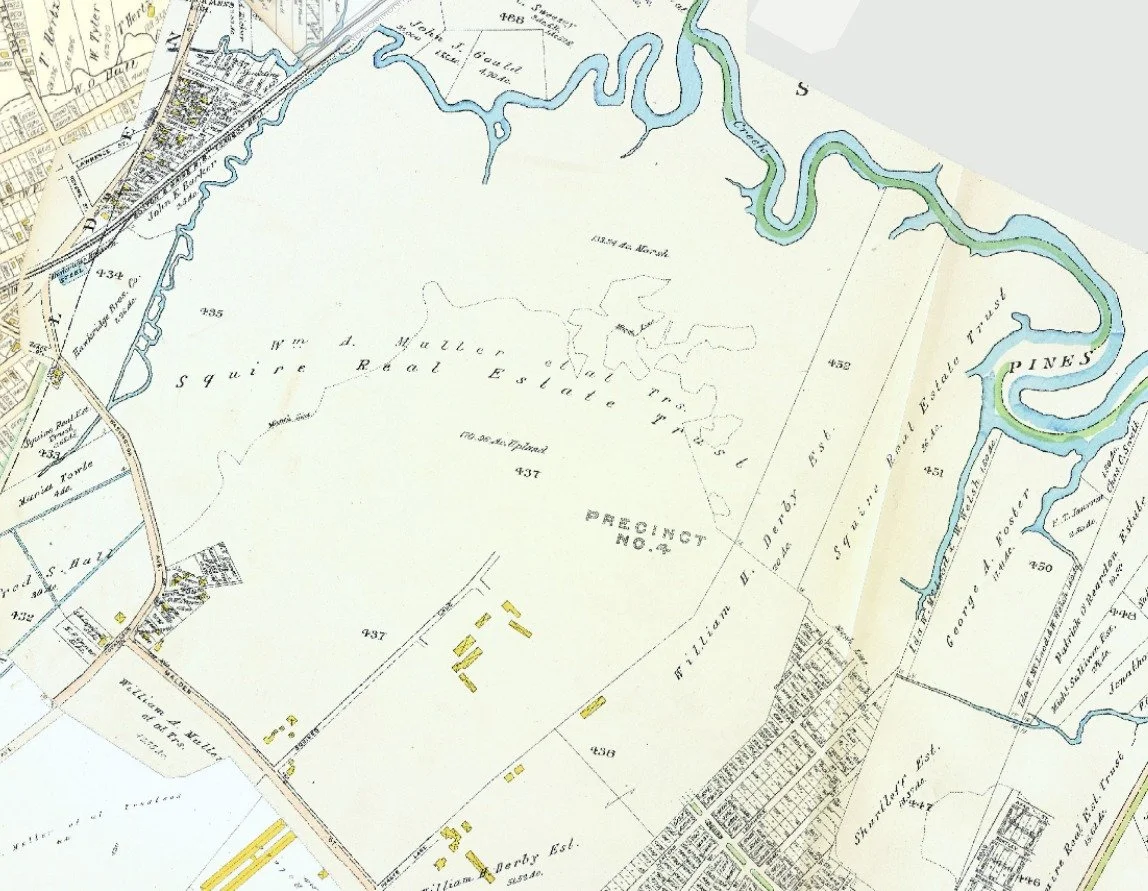
1900 Bromley Atlas showing JP Squire real estate holdings in West Revere / Rumney Marsh.
To support his massive operation, Squire owned significant land in what is now West Revere, right along the edge of the Rumney Marsh. Our 1900 atlas shows these holdings clearly.
• Squire’s Lane is roughly today’s Pemberton Street
• Derby’s Lane is today’s Derby Street
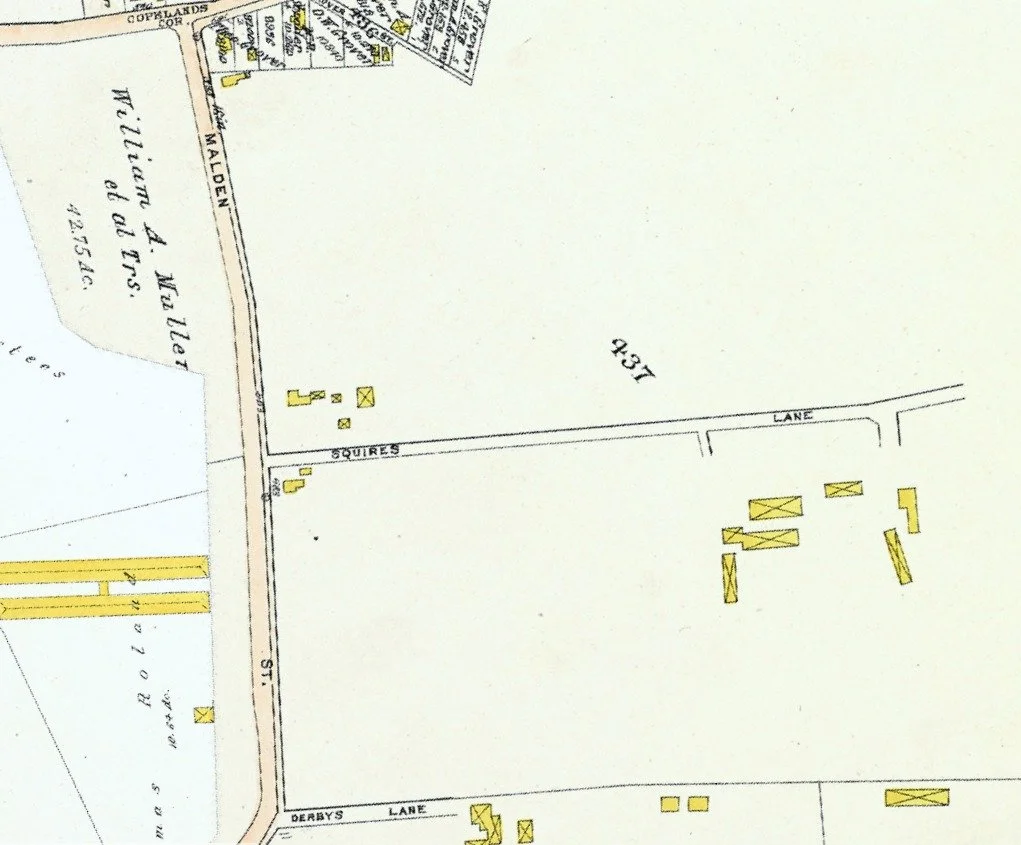
1900 Bromley Atlas showing early farming lanes extending from Malden Street, predating Squire Road.
Historical accounts suggest that pigs were raised on this marsh edge land before being transported to Squire’s slaughterhouse in Cambridge. That was a common pattern of the time. Livestock was often raised outside the city on cheaper land and then shipped in by rail for processing.
This early agricultural and industrial use helped shape the marsh landscape.
Pig farming and associated activity contributed to drainage, ditching, and early alterations of tidal flow, long before highways and landfills arrived.
But Squire’s legacy is not just industrial. It is also environmental and social.
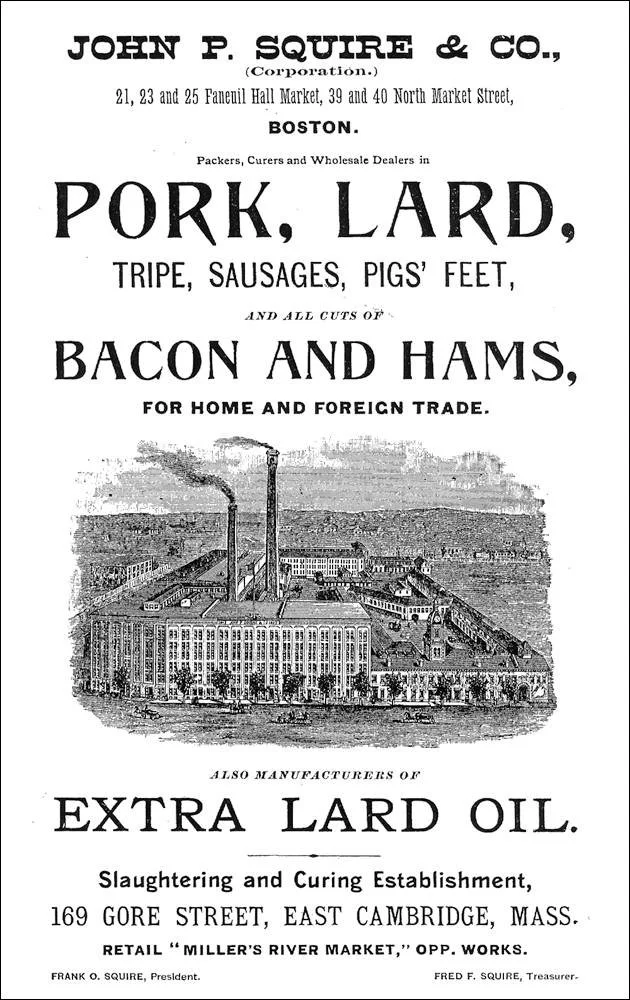
An original advertisement from John P. Squire & Co. when pork, lard and pigs’ feet were proudly printed in bold.
By the 1870s, his plant had become a major public nuisance. Waste products like pig blood, fat, urine and process water were dumped into the Miller’s River, which at that time flowed behind the plant and emptied into the Charles River. Tides were not strong enough to flush the waste out. The smell and contamination became unbearable.
In 1873, residents of Cambridge, Somerville and Charlestown petitioned the Massachusetts State Board of Health to close Squire’s plant and two others nearby. The Board described the Miller’s River District as one of the most foul and dangerous areas in the state, warning that if an epidemic broke out, it would spread rapidly through the dense population.
Despite this, the state refused to shut the plants down.
Instead, the cities decided to fill in the Miller’s River basin and construct underground sewer lines, effectively burying the problem. This 1874 decision helped Squire’s plant survive and expand. It also changed the physical geography of Cambridge forever.
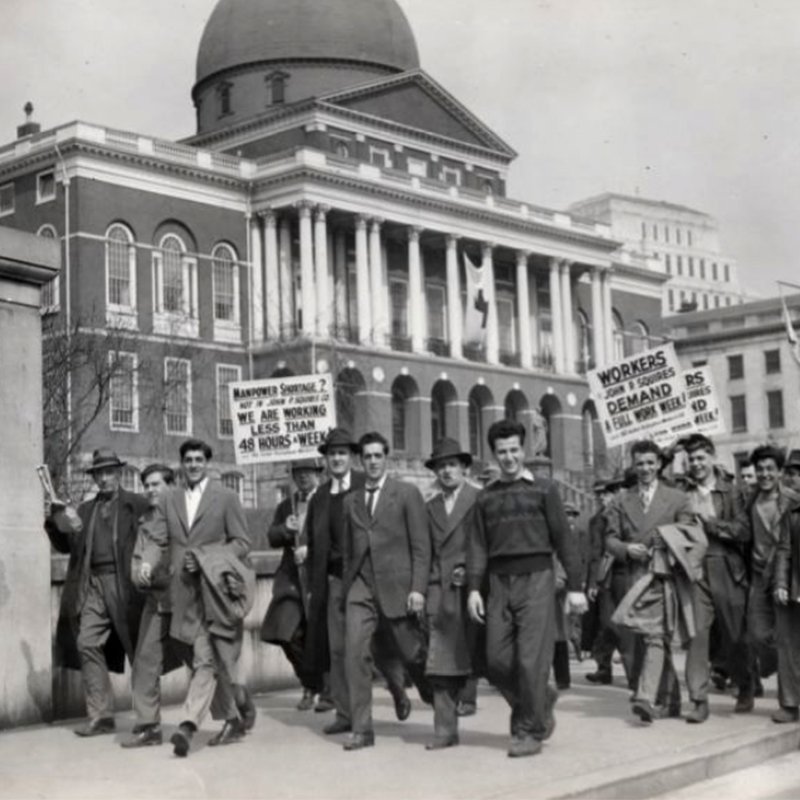
Squire’s workers outside the State House in 1945 fighting for fair hours and pay after wartime production slowdowns.
Squire’s plant was also defined by labor conflict.
By the 1880s and 1890s, hundreds of workers labored there under dangerous conditions. Newspapers described workers slaughtering 2,500 hogs per day, many living in company owned tenements and buying food from the company store with rent and provisions deducted directly from their wages.
Strikes and lockouts happened repeatedly. Workers sought higher wages, shorter workweeks, and safer conditions. Some were represented by the Knights of Labor. Injuries were common. One worker was crushed in machinery in 1890. Another had his leg dislocated when a hog fell on him from a hook.
A major fire tore through the plant in 1891, roasting 1,500 hogs alive and filling East Cambridge with the smell of burning grease. The plant was rebuilt. Squire died in 1893 and the company eventually passed out of family hands, later becoming part of the Chicago based Swift meatpacking empire.
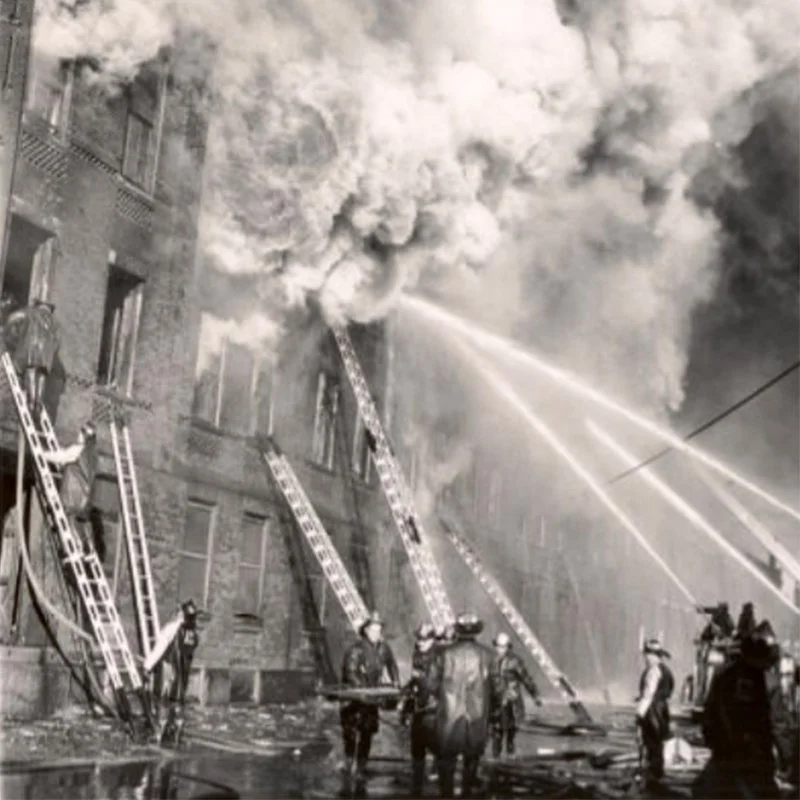
Firefighters try to put out the blaze at Squire’s on April 14, 1963.
Credit: Cambridge Historical Commission
By the mid 1900s, Squire’s employed thousands of Irish, Italian, Portuguese and other immigrant families across generations. In 1945, workers even marched on the Massachusetts State House after their hours were cut due to wartime hog shortages.
Meatpacking finally declined and the complex closed in the early 1960s. A massive Easter Sunday fire in 1963 destroyed much of what remained. Only memories were left of a company that once dominated East Cambridge.
So when you stand along Squire Road or look out over the edge of Rumney Marsh today, you are standing on land tied to a much bigger story. Railroads. Slaughterhouses. Pig farms. Environmental damage. Immigrant labor. Early public health battles.
